
I became a CNA in the late 70s. I attended a single-semester (15 weeks/8hours per day) program in northern California, my first four weeks in a classroom and lab, where our instructors (RNs) showed us how to check vitals, wash hands, and give proper backrubs. For good measure they threw in a wee bit of anatomy. They taught us how to make beds.
The final 10 weeks were spent in clinical. Depending on your standing in the class, your acute : long-term experience ratio could be portioned anywhere from 2:8 weeks to 8:2 weeks. I was scheduled to a long-term care facility for two weeks, and to one of the local hospitals for eight.
To say I loved my work at the hospital is an understatement - I felt as though I'd found a new and better religion. At the end of my third day on the medical ward at Fremont Hospital, I was offered a job. And the day after I received my certification I started getting paid for doing something I would have done for the rest of my life for free.
For a few years I worked as a nurse's aide, both in northern California and in northern Montana. But the economy went south, and Tom got laid off. A man who could not not work, Tom went back into the Corps.
We moved to Camp Pendleton/Oceanside, where btw, there were no immediate openings for CNAs. Even for one with a few years post-surgical experience and a bevy of references. So I took a job as a cook, and I stayed a cook for the entirety of Tom's re-enlistment. And while at Pendleton, I attended a local community college, and started working on my general education requirements. (expository writing, chemistry, biology...)
As soon as his new obligation was fulfilled, we came back to Montana. But with no shortage of LPN and RN students, the hospitals in my area were not interested in a CNA who hadn't worked acute-care for over four years. So I settled for long-term. I hated it, but I stuck with it till we could afford the tuition for the LPN program.
It was a vocational program lasting four quarters (48 of 52 weeks). The first two were didactic, and the balance was made up of clinical rotations through the different wards of both hospitals, and in OB, Psych, ER, OR, and even a week in a doctor's office.
I started the program with 22 classmates, but only 5 of us made it to clinical. The first two quarters were like finals week the entire stretch. I felt as though I'd crammed the first 6 months of school. My brain was full. And as I hit that wall, I wondered - Was this a stupid idea? Am I going to have wasted all this money and time, only to find out I hate nursing?
[But] my very first day, my very first hour, on 4-south (a post-surgical ward) at Saint Patrick's Hospital, it was as though the Holy Spirit, Himself, had washed through my body. I'd come home.
- - - -
I took the long way to my RN. After graduating from the Vo-Tech, I re-enlisted in the Army. And even afterwards, when I got back home, I still worked for another year or so as an LPN.
And then, even as I attended university, I didn't focus on a Nursing degree. The Course Catalogue was a candy store. There wasn't a subject I wasn't interesting in learning. Overall, in addition to my non-transferable Vo-Tech credits, (and my post-graduate credits), I racked up some 170 undergrad-credits, only 64 of which were part of my nursing component. If I had been independently wealthy, I would have stayed in school till I exhausted the entire catalogue.
Okay. So this entry is to respond to something an LVN (whom blogger.com had to bar from stalking this blog) wrote: that I never discuss my experiences as an RN. I'm not sure what she's looking for. Something exciting? Something extra? I can't help but notice from her posts that she names names of patients she's had that were celebrities. Hm. Did I assist in any surgeries on any well-know personalities/politicians or their families? Yes. Will I drop names? No, and hell no.
Did I participate in exciting, complicated procedures/surgery? Sure. Did my RN make a difference? Absolutely. Did all that extra schooling help? Yes. Did any of it become old hat? No. Every evening before any scheduled procedures, I would review the patients' charts, I would review their pathologies, and I would review the procedure itself (including imaging myself going through the motions). Every single time.
But it's redundant to post about it. I am a nurse. These things are what being a nurse is all about.
So, what does she want to hear? Something extraordinary? How about the time several of us brought party balloons into an empty OR on April Fools Day, and breathed in the gas before calling the front desk to report a Helium leak?
Or maybe time I sank to my knees sobbing, because an old man I recognized from choir died before we could stop his spleen from spilling the 8 units of whole blood the 2 circulating nurses were squeezing into him?
Or the time I climbed into bed with a 3-day, post-MVA alcoholic, screaming in terror at snakes in his water pitcher, so that I could prevent him from further gouging his lips and eyes?
I'm sorry to disappoint, but while nursing is an extraordinary profession, it is not a profession for those who seek the extraordinary. Our work is honest, simple, no matter the scope/extent of our education. We solve problems. We figure out best how to keep a patient oxygenated, nourished, eased from pain, rested, healing...safe.
Not 6 months before I was diagnosed with this stupid IQ-stealing tumor, a student RN rotating through the OR wanted to observe the open reduction and repair of a Le Fort II fracture. I let her scrub in and stand beside me. (As first assistant I stood opposite the surgeon, and our scrub tech stood beside him.) The student was so excited, I thought she was gonna wet herself. She was fascinated by the itty bitty-ness of the implants. A woman after my own heart, I appreciated what she was going through.
She had hundreds of questions about Advanced Practice nursing, but only one do I remember clearly. She asked me, "What do you like best about Nursing?"
I told her, "Making beds."
Showing posts with label nursing. Show all posts
Showing posts with label nursing. Show all posts
15 March 2010

21 February 2009
Spilling Oxytocin
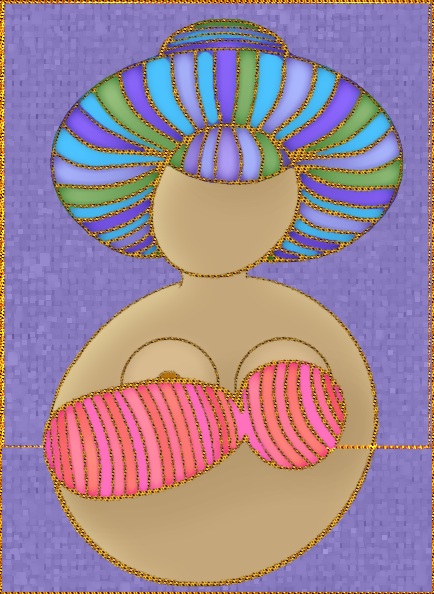 Years ago, even before LPN school, I spent a summer working the night shift in the Neonatal Nursery at Kalispell Regional Medical Center. It was one of those banner years, when everyone seemed to be in labor. We helped deliver dozens of unexpected babies. Moms on vacation from places like Texas, New York, California, British Columbia, (and even one from Germany) were delivering babies in Kalispell, Montana.
We were filled to capacity. Our nursery was designed for 13 well babies and 4 NICU babies. All of our beds were full. We were medevacing women to Libby, Missoula, and Spokane. And it wasn't just well babies that were coming in record numbers. Even with the 4 NICUs, we had to send sick babies to Salt Lake City and Seattle. (We had one born 21 weeks gestation, and another whose mom presented placentae abruptio.)
I mean we were busy, with a capital B. We even had contracted, Traveling Nurses from Quebec and New Zealand to help staff the NICUs.
Consider this a preface, a mural, a backdrop to what I'm dying to tell you. For like 14 weeks straight, there were babies everywhere; Nurses rushing from room to room; Women screaming; Docs, midwives, tribal elders all talking at once. Patients and family speaking Blackfeet, Crow, English, French, and German - medical jargon, pleas, profanity, yelps of joy...everyone in blue scrubs and blue paper shoes.
And in the nursery, wee babies. Bundles of love who had no clue what mayhem their arrivals wrought.
As with most hospitals, our policy regarding post-surgical, bottle-feeding moms (C-sections, tubal ligations) was to let them sleep that first night. When it gets down to it, back then, unless mom specifically asked that she be wakened to feed her baby, we pretty much let her sleep the night through, anyway.
It was the nursery staff who feed their babies. Me. I got to feed their babies.
I worked the 11 to 7 shift. And I spent a good half of it with a bottle in my hand, cuddling babies to my breast. I spilled so much oxytocin, I'm surprised I didn't start producing milk. The sensation of letting-down was certainly there. I called it phantom at the time, but actually, the reflex was real. There just wasn't any milk to secrete.
Every morning I came home to my husband, yearning for these babies. And when each of them went home with their mothers, I grieved.
11 February 2009
Wearing the Uniform
 I looked up from my lunch today, and watched four folks come in wearing blaze orange vests, reflection tape, and tan redwing boots. I had no idea who they worked for or what they did for a living. But clearly, they worked together. They were a unit.
I remember what that feels like, sitting with friends, sharing a goal, sharing a purpose, wearing the uniform.
Cammies, scrubs, corporate smocks with a name tag, it doesn't much matter as long as you match - cohesion under the guide-on, wearing the colours, prayer cloths offered to the gods of Purpose.
And shoptalk. I loved it. Lunch at the mess hall, margaritas at the O-club, slouching around the hospital cafeteria, eating hot pizza after a particularly long day in the OR. It didn't matter if we were debating dexon v. chromic, reciting stock numbers, or suggesting new DD acronyms. We shared jargon, spoke in our own secret language, comprehended by club members only.
It's funny to think back on it. I don't know that it occured to any of us that our language might be regarded as exclusive. But thinking on it now, I see it as part of the uniform - as important as the nametag, the strings dangling from a spent OR mask, or the subdued rank on one's collar.
I miss that.
Subscribe to:
Posts (Atom)


